
Wondering what to bring back from a Turkey trip? Here’s your curated go-to guide to Turkish souvenirs and the best things to buy in Turkey!
Whenever we visit our friends and family abroad, we always end up looking like traveling Ottoman merchants from the 1600s.
The moment when we unzip our huge suitcases, it’s a chaotic but glorious avalanche of Turkish treasures: hand-painted tiles, freshly-roasted coffee, lokum from our local market, handmade soaps, turquoise nazar beads, and whichever seasonal jam we’re currently obsessed with.
Honestly, there’s a reason why our bags look like treasure chests: shopping for souvenirs in Turkey is half the fun of the trip. With so many beautiful, delicious, and genuinely useful things, it’s almost impossible not to fall in love with something!
A silk scarf here, a copper coffee pot there… and suddenly your suitcase is a little heavier and your heart is a little fuller. (And your friends are noticeably happier — baklava has that effect 😉).
But with so many tempting things, the real question becomes, what should you actually buy in Turkey? Or more specifically, what to buy in Turkey that’s truly worth the suitcase space?
That’s exactly why we’ve curated this local’s guide to Turkish souvenirs, the best things to buy, and insider tips to help you avoid tourist traps!
We live in Istanbul and spend an enthusiastic amount of time strolling through local markets, bazaars, grocery stores, and spice stalls — so consider this your go-to guide from people who’ve actually bought (and gifted) all of these things. 🙂
Whether you’re souvenir hunting in Istanbul’s bazaars or picking up pistachios in Gaziantep, our guide will help you shop with confidence.
We’ll also share tips on the best places to buy souvenirs in Istanbul and beyond, cool regional specialties (do you know about the Şahmeran?), and even an anti-souvenir list (AKA what not to waste your suitcase space on!)
Skip the Tourist Traps & Shop Like a Local With These Tours!

Istanbul Grand Bazaar: From Rooftops to the Secret Passages
This definitely isn’t your typical shopping trip! Hear juicy stories about Istanbul’s 600-year trading legacy, explore tucked-away artisan shops you’d miss on your own, and enjoy exclusive rooftop access (including amazing views over the bazaar’s labyrinth!)
Book the rooftop & secret passage tour here →
Private Shopping Tour In Istanbul
Skip the pushy sellers and shop like a local. Whether you want to shop at chic boutiques or bazaars, this customizable tour takes you exactly where you want to go (and includes private transport and lunch!)
Starts at just $6/person! Book here →
Istanbul Rug Shopping Private Tour with Expert
If you’re even thinking about buying a Turkish rug, book this tour! You’ll get one-on-one guidance from a licensed guide with 25+ years of experience (who also wrote a book about rugs!). Learn what to look for, decode regional styles, and get access to trusted rug sellers.
You can also quickly browse this (huge!) list of Turkish souvenirs with our table of contents:
- TOP 5 Best Turkish Souvenirs
- Best Turkish Drink Souvenirs
- Best Turkish Sweets & Dessert Souvenirs
- Best Turkish Food Souvenirs
- Self-Care & Beauty Turkish Souvenirs
- Clothing & Fashion Turkish Souvenirs
- Handicrafts & Home Decor Souvenirs
- Classic Turkish Cultural Souvenirs
- Niche Turkish Souvenirs
- Regional Turkish Souvenirs
- What Not To Buy in Turkey
TOP 5 Best Turkish Souvenirs
If you don’t have time to read this entire blog post, no worries — it’s over 8,000 words long, so we understand. 😅
We’ve rounded up the five most popular Turkish souvenirs (AKA the things that Turkey is known for!) below:

#1 Turkish Delight (Lokum)
The iconic boxes of lokum are Turkey’s most famous export (other than their melodramatic Turkish TV series, of course 😄).
If you’ve never tried them before, Turkish delight are basically little chewy, gummy cubes that come in different flavors. The most classic lokum flavors are strawberry, pomegranate, orange, lemon, rose, and cinnamon, but there are more than 100+ flavors, including unique combinations like chocolate, hazelnut, pistachio, sesame, saffron, coconut, and more.
You can find these ubiquitous Turkish sweets practically everywhere, but our favorite place to buy them is from Hacı Bekir, the company that invented them! They have a few stores in Istanbul (including Istiklal Street and Kadikoy), so technically speaking, it’s also one of the best souvenirs from Istanbul! 😉
Travel Tip: Just like with other foodie souvenirs from Turkey, it’s best to buy fresh Turkish delight. Avoid buying the touristy lokum in mass-produced colorful boxes with comic sans font (you know the one), since you don’t know how long they’ve been on the shelves.
Make Your Own Lokum in Istanbul!
Learn the sweet history of lokum, try 10+ flavors, and make your own delicious Turkish delight with expert guidance. It’s fun, unique, and makes a great gift (or snack for yourself!)

#2 Evil Eye Charm (Nazar Boncuk)
In Turkey, you’ll see these blue-and-white glass talismans everywhere: on doorways, in taxis, hanging above shop entrances, and even pinned to baby strollers.
Across many cultures, the evil eye symbol is believed to offer protection and bring good luck, which is why almost every Turkish home has at least one (ours included 😉🧿).
Nazar charms come in all shapes and sizes, including bracelets, glass beads, keychains, wall hangings, coasters, fridge magnets, and even cute cat collars. In fact, did you know that there’s even a traditional village near Izmir that’s famous for producing them? It’s called Nazarköy (literally translated to Nazar village!)
These beautiful (and useful!) charms are definitely one of the best traditional Turkish souvenirs to buy.

#3 Turkish Coffee
Coffee has such a special place in Turkish culture that there’s even a famous proverb that goes “A single cup of coffee is remembered for 40 years.”
However, its history in daily life goes much farther than that. According to legend, the governor of Yemen brought a pack of coffee to Suleiman the Magnificent in the 1500s and, after trying a cup, the sultan was instantly impressed.
Before long, coffee became a prestigious drink of the upper class, and there was even a new role created in the Ottoman court, the kahvecibaşı, which was the palace’s personal barista. 🙂
If you want to bring home a piece of that tradition, one of the best places to buy a pack of Turkish coffee is Kurukahveci Mehmet Efendi. This legendary roaster has been supplying the country with fresh coffee since 1871, and remains a local favorite to this day.
It’s hard to miss their kiosks near the Spice Bazaar (📍location) or Sirekci (📍location): just follow the smell of freshly-ground coffee and look for the lines curving around the block (don’t let that scare you off, though — the line moves quickly!)
Not in Istanbul? No worries, you can find their iconic rose-gold packaging at stores like Migros.
If you’re looking for a tasty and cheap souvenir from Turkey, go with a classic bag of Turkish coffee. It smells delicious and fits in any carry-on!
☕️ Want to learn even more fun facts about Turkish coffee, its history, and rituals? Check out our Ultimate Guide to Turkish Coffee here OR take a fun Turkish Coffee Workshop in Istanbul or in Antalya →

#4 Turkish Towels (Peştemal)
If there’s one souvenir that’s both beautiful and useful, it’s a Turkish towel.
Known as peştemal, these thin cotton or linen towels were originally used in hamams but eventually became so popular that they’re now sold everywhere.
They’re super lightweight, dry quickly, and fold up small, which makes them perfect for travel. Ms. Kedi uses hers as a beach towel, cover-up, shawl, even makeshift picnic blanket.
If you’re near Sultanahmet, Jennifer’s Hamam (📍location) has an excellent selection and very knowledgeable salespeople. For Beyoğlu/Galata, we recommend Çağla’s Gift Shop (📍location), a small shop run by father and son who have high-quality and budget-friendly towels, robes, hamam goods, and other unique souvenirs from Turkey.

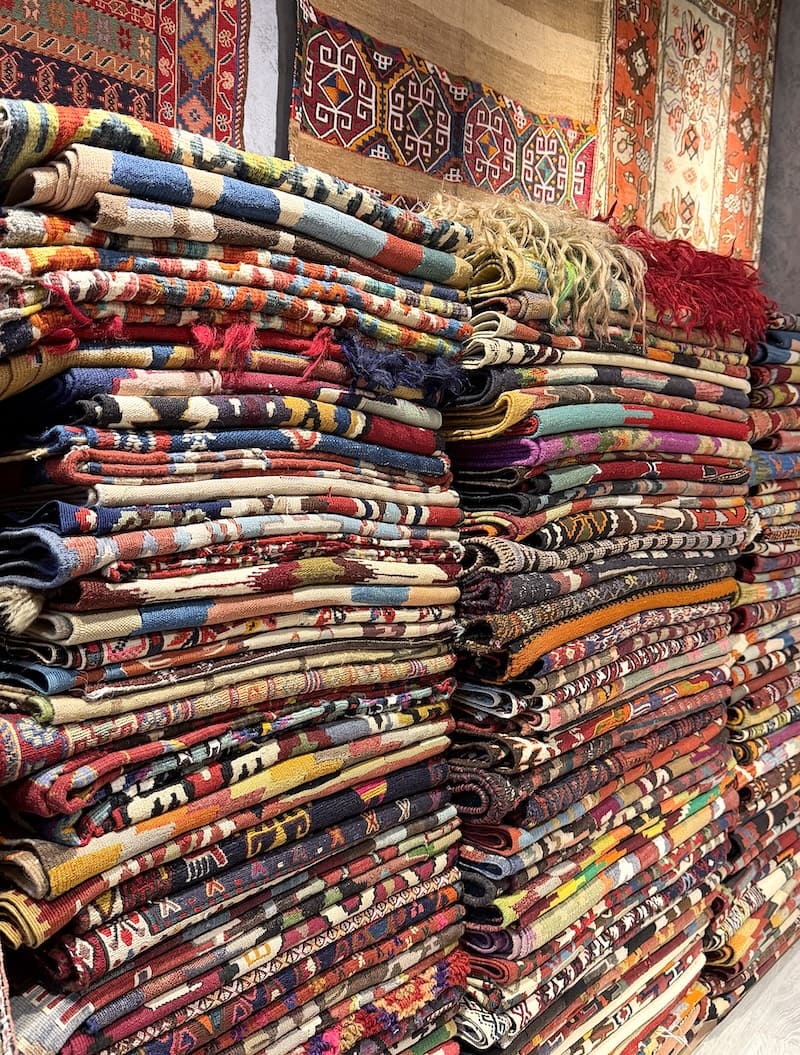
#5 Turkish Rugs & Kilims
Last but certainly not least, perhaps one of the most iconic Turkish souvenirs is a beautiful handmade rug!
(In fact, Where can I buy Turkish rugs in Istanbul? is one of the most common questions we get from visiting family members, but we digress.)
Turkish rugs are the most famous souvenirs from Turkey, and for good reason. After all, each piece carries centuries of craftsmanship, interesting symbolic motifs, and plenty of character. Each piece is handmade (often on a loom), dyed with natural pigments, and tied using a special double-knot technique that makes it durable for decades, if not generations.
Fun fact: If you look closely, each Turkish rug also contains traditional symbols and motifs!
For example, the elibelinde (hands on hips) symbolizes the feminine spirit and family, while the koçboynuzu (ram’s horn) represents masculinity and power. The yilan (snake) motif offers protection, su (water) symbolizes life, and nazar (evil eye, mentioned above!) guards against misfortune.
🧵 Want to Buy a Turkish Rug But Are Afraid of Getting Scammed?

You’re not the only one — carpet shopping in Istanbul can be overwhelming, even for locals! (Trust us, we’ve done it 🥲)
If you’re serious about buying a Turkish rug, we highly recommend Mr. Ali, a rug expert with over 25 years of experience (he even wrote a book called All You Need to Know Before Buying Oriental Carpets)!
His private rug shopping tour is like hanging out with a very fun and very honest uncle who just happens to be a walking encyclopedia of carpets, dyes, and rug symbolism. He also leverages his professional connections in Sultanahmet so you only deal with authentic rug dealers and visit places that most tourists don’t know about.
And the best part? Since it’s a paid tour, there’s no pressure to buy and no hard selling at all. Think of it as a ½ shopping tour and ½ crash course to Turkish carpets. 🙂
You can book Ali’s Private Rug tour on Viator or GetYourGuide →
We’re sure that you still have plenty of space in your luggage, so let’s take a look at even more Turkish gifts and souvenirs!
Best Turkish Drink Souvenirs

Turkish Tea (Çay)
Did you know that Turkey has the highest tea consumption in the world? With an annual consumption of over 3 kilograms per person, that comes out to an average of 3 cups a day!
Safe to say, Turks are pros when it comes to tea. You’ll spot locals balancing tiny glasses on saucers everywhere like park benches, hardware stores, and even hair salons. It’s brewed strong, poured from a stacked teapot (çaydanlık), and best enjoyed with company or a simit.
The most authentic Turkish tea comes from Rize, the country’s tea-growing region near the Black Sea (the humidity really helps!). Both Çaykur and Tirebolu 42 are classic Turkish teas that are universally loved by locals and are sold everywhere.
We also love Lazika, which is more of a higher-end “boutique” tea but comes in beautiful packaging, and Chado in Istanbul ( their 📍location in Cihangir is amazing) — their Istanbul series is so cute and one that we personally buy as souvenirs for our friends. 🙂
Tulip-style Turkish Tea Cups
With all that tea drinking, it only makes sense that Turkey would invent its own signature tea cup.
These cups are shaped like tulips (a nod to the country’s love for this flower), yet nicknamed ince belli (“slim-waisted”) for their shape. However, it doesn’t stop at just aesthetics. The shape of the cup has a very practical function: the narrow middle keeps the tea hot while the top stays cool enough to sip. Genius, right?
They also make the perfect Turkish gifts: stylish, practical, and very Turkish.
The most popular brand of Turkish tea cups is Paşabahçe, whose glassware you’ll find in nearly every home, cafe, and breakfast spot. Funnily enough, we even spotted their glasses overseas (the furthest we’ve seen it is in Thailand!). You can pick up a boxed set at most supermarkets or at any Paşabahçe store across the country.
Fun fact: The air traffic control tower at Rize-Artvin Airport is in the shape of a Turkish tea glass!


Pistachio Coffee (Menengiç)
Alright, so we already talked about the iconic Turkish coffee above (under Top 5 Best Turkish Souvenirs), but what about a souvenir for those of us who can’t drink caffeine?
No worries, we have just the answer: pistachio coffee. Although it’s called menengiç kahvesi in Turkish, this drink contains neither coffee beans nor caffeine — but it is pretty delicious! 😁
Menengiç was traditionally produced in the southeastern part of the country, and is a speciality of Gaziantep (the capital of cuisine, which should tell you something). The taste is very mild, nutty, and kind of milky; we love it because it’s not as strong as coffee, and feels more “cozy” (for lack of a better word lol).
You can buy menengiç in specialty food stores, some traditional coffee sellers, and spice markets. If you want to taste it before buying, we recommend Payedar Kahve (check out our Üsküdar Guide for more info!)
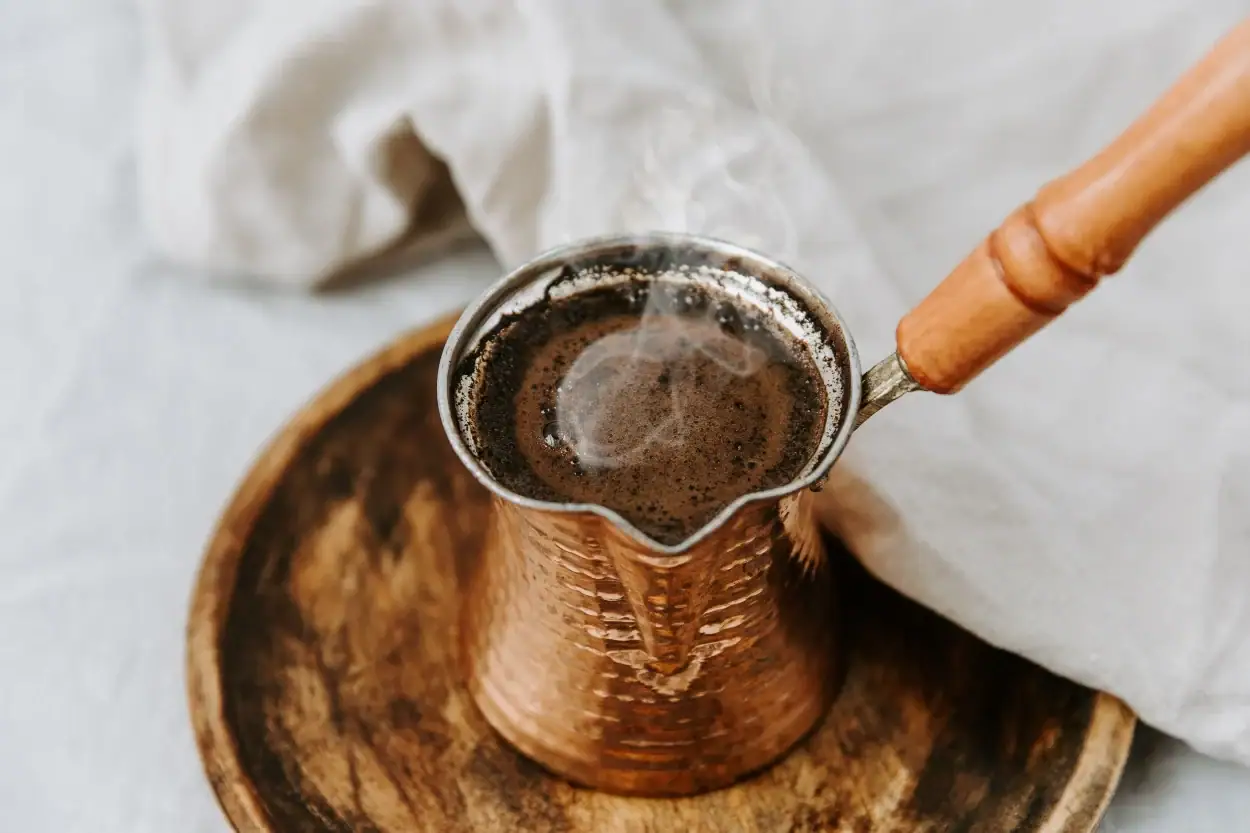
Turkish Coffee Pot (Cezve)
While we’re on the topic of coffee, let’s talk about the cezve, the small copper pot that’s essential for brewing Turkish coffee.
The most classic ones are hand-hammered and made of copper, and you can find them at places like the Grand Bazaar (or any major bazaar in Turkish cities!) and specialty kitchenware shops.
However, some of the most beautiful cezves are handmade by coppersmiths (bakırcılar) using centuries-old techniques passed down through generations.

Coffee Cup Set
So, you’ve got your bag of Turkish coffee (or menengiç), and your cezve pot is ready to go… Now all you need is a beautiful Turkish coffee cup set to enjoy it in style!
Turkish coffee cup sets include a porcelain or ceramic cup (fincan) and matching saucer, and are usually sold in sets of 2, 4, or 6 — though you can also buy individual ones if you’re just after that one perfect piece.
We love the designs at Karaca and Paşabahçe, and you’ll find their shops in nearly every mall or shopping street — Karaca offers modern and chic designs, while Paşabahçe has more timeless classics.
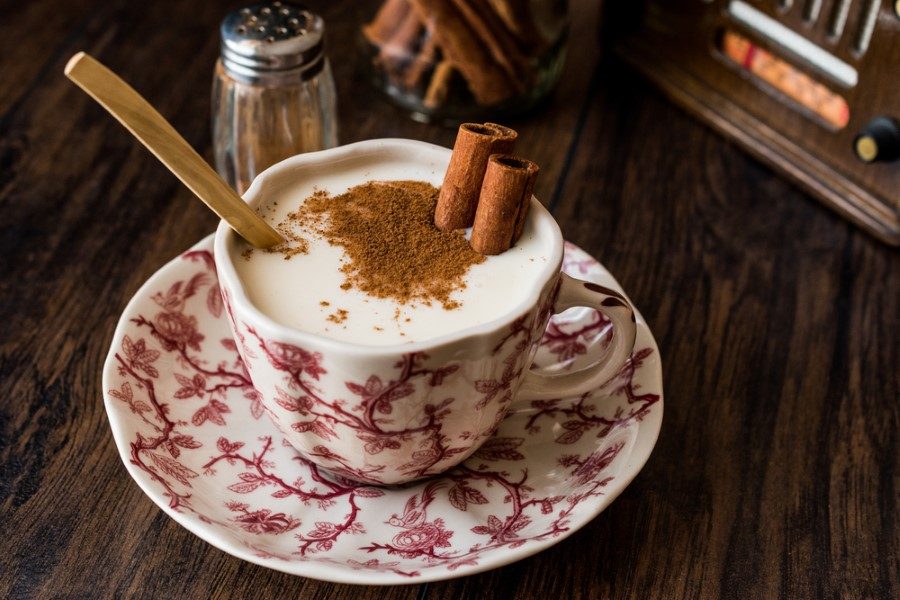
Salep
This creamy hot drink is made from the powdered root of wild orchids and has a naturally sweet, velvety taste (kind of like sweet milk). It’s non-caffeinated, super cozy, and always topped with a dusting of cinnamon.
You’ll find salep sold in small packets or glass jars (depending on the brand), and they’re typically sold at spice shops (baharatçı) around the country.
🧣Bonus tip: If you visit Turkey in winter, many cafes serve fresh hot salep by the cup!


Rakı
Of course, we couldn’t forget about Turkey’s national drink: rakı!
Although it can be enjoyed anywhere and anytime, this anise‑flavored alcoholic beverage is especially popular along the coastal regions (for some reason we associate it with Bodrum), at meyhanes (tavernas), and alongside a delicious seafood spread.
You can buy a bottle of rakı at any duty‑free store or local market. The proper way to drink it is to pour it in a narrow glass (about half way) and then dilute with water to your preferred taste. Rakı is best served with plenty of small meze plates, with the most popular being sliced melon and white cheese.
Fun fact: the drink is popularly nicknamed Lion’s Milk (aslan sütü) because it changes color when it mixes with water.
Turkish Wine
One of the biggest things that visitors are surprised to learn is that Turkey has a thriving wine scene!
From the volcanic soils of Cappadocia to breezy Aegean vineyards, Turkish wines are complex, easy to drink, and totally unique. That’s not all: it’s also rumored to have been one of the earliest wine-producing regions of the world!
Today, over 60% of the country’s wine comes from the Marmara and Aegean regions, where the climate and soil make for delicious reds, whites, and rosés. If you have some room in your itinerary, be sure to visit Şirince, a hillside “wine village” near Ephesus known for its cobbled streets, fruit wines, and idyllic atmosphere.
If you’re a wine connoisseur or just curious about trying Turkey’s varieties, we highly recommend going on a wine tasting tour. You’ll learn about the various grapes and regions, try delicious local wines, and perhaps even find your next favorite pour!
We love this Wineries Tour with a Private Sommelier in Istanbul and this Cappadocia Wine Tasting Tour. If you’re traveling along the Aegean, this Kuşadası, Ephesus, and Şirince tour will take you to the famous wine village!
Best Turkish Sweets & Dessert Souvenirs

Baklava
Without a doubt, baklava is the gold standard of Turkish dessert souvenirs. Just imagine those thin layers of flaky phyllo dough, crushed pistachios or walnuts, and a just-sweet-enough syrup to tie it all together. BRB, we’re going to order some right now. 🤤
For authentic baklava, we always go to Güllüoğlu, where everything is made in-house daily. Another excellent spot is Köşkeroğlu, which has both a traditional and modern lineup of baklava.
🎁 Local tip: “Dry” baklava can typically last for 7 to 10 days at room temperature (although you’ll probably eat it before then 😁). For travel, ask for a sealed box and say it’s “for abroad” (“yurtdışına götüreceğim”) so they’ll pack it properly.

Sure, bringing home a box of flaky baklava is a sweet idea…
But what if you could recreate the magic yourself? Join a local host in her home kitchen and learn how to prepare baklava from scratch, bake it to perfection, and bond over one of Turkey’s most iconic desserts!

Turkish Chocolate
For something a little classic, you can’t go wrong with chocolate. 🙂
Besides the standard milk chocolate bars, there are some unique varieties that you can only find in Turkey — for example, chocolates with pieces of baklava, pistachio, or lokum! The most popular chocolate brands in Turkey are Eti, Beyoğlu, Nestle Damak, Kahve Dünyası, and Torku.
We like to buy a few bars of chocolate when traveling abroad and then hand them out to locals and people we meet (for example, a hotel employee). Our go-to is fıstıklı gofret (wafers with pistachio) or the chocolate with lokum pieces in the photo above. Eti, #PleaseSponsorUs 🥲

Turkish Sweets
If you’re traveling around any touristy area in Turkey, you’ve probably seen those colorful red bags and a logo of a guy with a mustache and fez hat — that’s Hafiz Mustafa (above), and his stores are easily one of the most iconic places to pick up sweet souvenirs in Turkey!
Their signature red tin boxes are especially popular and have everything from baklava to nuts, chocolates, lokum, and more. There are also special “mix boxes” that have a little bit of everything (they make the best Turkish gifts if you’re not sure what to buy but want a little bit of everything!)
They also sell dragée, halva, nuts, coffee, tea, and little gift sets, in case you’d like to do all of your souvenir shopping in one go. 🙂
Hafiz Mustafa has a couple dozen stores — the majority are around Istanbul, but there are also some in Bodrum and Antalya (plus a few abroad!)

Tahini Halva (Tahin Helvası)
Made from crushed sesame seeds and sugar, this nutty and crumbly dessert is often eaten for breakfast or with tea in Turkey.
One of the best-known brands is Koska, and you’ll find their halva everywhere from supermarkets to duty-free shops. They also make diabetic-friendly versions too!
Best Turkish Food Souvenirs
Continuing our trend, let’s look at some of the best edible souvenirs from Turkey. 🙂

Olives
Did you know that Turkey is the world’s largest producer of table olives (zeytin) and the second largest producer of olive oil in the world?
From Marmara region-style black olives to buttery green olives from the Aegean, they’re a staple in every household — and make for some of the best edible souvenirs from Turkey!
You’ll find dozens of varieties at local markets and gourmet shops: some are brined, some are dry-cured, and others are stuffed with garlic, almonds, or even sun-dried tomatoes. One of our all-time favorites are grilled olives (ızgara zeytin), which are smoky, slightly charred, and super delicious.
🫒 Pro tip: Pick up a vacuum-sealed pack from reputable shops like Namlı Gurme or buy by the kilo at Istanbul’s Kadıköy or Beşiktaş markets. Just make sure to ask for a vakumlu paket (vacuum pack) if you’re planning to bring them in your luggage.
Olive Oil & Olive Products
However, don’t stop at just olives! 😉
Turkey produces some of the world’s finest cold-pressed extra virgin olive oil, and the silky, aromatic oils from the Aegean coast are especially sought-after.
If you’re visiting the Aegean or Marmara regions, keep an eye out for local brands at farmer’s markets or gourmet shops. Likewise, Macrocenter carries beautifully bottled olive oils that make elegant gifts — just be sure to pack it safely in your checked luggage!
Looking for a very unique Turkish food souvenir? Don’t skip olive paste (zeytin ezmesi). Made by crushing black or green olives into a savory spread, it’s rich, salty, and perfect for slathering on bread or adding depth to meze spreads. It comes in both green and black olive versions and sometimes includes hints of garlic, lemon, or herbs.
It keeps well, travels easily, and makes a seriously underrated (but delicious!) food gift from Turkey.

Spices & Spice Mixes (Baharatlar)
As one of the key stops along the legendary Silk Road, it’s no surprise that Turkey takes its spice game very seriously. Just wander along any bazaar and you’ll be met with pyramids of colorful spices, dried chili garlands hanging overhead, and the delicious smells of spices swirling in the air.
Some of the most popular spices in Turkish cuisine are red pepper flakes (pul biber), oregano (kekik), sumac (sumak), cumin (kimyon), mint (nane), cinnamon (tarçın), and black pepper (karabiber).
For something uniquely local, we recommend isot pepper, which is a spice made from Urfa peppers and has a distinct smoky flavor, or safran (saffron, which is grown locally in Safranbolu!)
If you’re traveling light (or don’t want to lug around 15 jars of spices 😁), there are also pre-mixed spice blends that you can use to elevate your dishes. These are often designed with specific dishes in mind — for example, seasoning blends for chicken, fish, and salads — and come in smaller packages.
Arifoğlu is one of the most popular spice merchants and their stores can be found all over Turkey. You can also type in “Baharatçı” in Google Maps to see all of the traditional spice stores near you.
In Istanbul, we recommend skipping the Spice Bazaar — yes, it’s atmospheric, but also very touristy and overpriced (sorry 🥲). Instead, take the ferry to the Asian side and go shopping at one of the many spice stores around Kadıköy Market. We buy our spices at Ulaş Baharat ( 📍location), a family-run shop that’s been in business for three generations.

Jam (Reçel)
If you’ve ever had Turkish breakfast, then you know just how delicious the local jam is. 🤤
You’ll find jam in more than a dozen flavors, from the classic rose (gül), fig (incir), sour cherry (vişne), apple (elma), and quince (ayva), to the more unexpected varieties, like tomato jam (domates reçeli)!
For high-quality options, look for organic jams at health food stores (organik dükkanlar). A cute jar of delicious jam is definitely one of the best souvenirs from Turkey for those foodie friends!
Honey (Bal)
We’re not done with sweet Turkish souvenirs just yet — how could we forget the country’s delicious honey? 😉
Locals swear by it not just for flavor, but for health too, and you’ll find jars of the stuff in every variety imaginable.
Floral honey (çiçek balı) is the most common, but keep an eye out for varieties like thyme honey (kekik balı), pine honey (çam balı), chestnut honey (kestane balı), lavender honey (lavanta balı), and citrus blossom honey (narenciye balı, which is a speciality from the Mediterranean region).
🍯 Local tip: One of our favorite small souvenirs from Turkey are those packs of single-use propolis sachets, which are sold in organic markets, pharmacies (eczane), or Migros. You can eat them straight from the pack or stir them into tea. They’re a great healthy souvenir from Turkey, especially in the colder months. 🙂
Pomegranate Syrup (Nar Ekşisi)
One of the most underrated souvenirs you can bring back from Turkey is a bottle of pomegranate syrup. This tangy-sweet elixir is made by slowly reducing pomegranate juice until it turns into a rich syrup. It’s a staple in Turkish kitchens and used to drizzle over salads, serve alongside çiğ köfte, or jazz up anything that needs a little kick.
Local tip: Look for labels that say “%100 Nar Ekşisi” and avoid anything called “nar ekşili sos”, which is usually a cheap imposter bulked up with sugar, citric acid, and coloring.

Dried Fruits & Nuts
Looking for an easy-to-pack gift that’ll please everyone from your cousin to your coworker? Stock up on mixed nuts and dried fruit blends!
The most popular nuts in Turkey are Pistachios (Antep fıstığı), Hazelnuts (Fındık), Almonds (Badem), Walnuts (Ceviz), Sunflower Seeds (Ayçekirdeği), and Roasted Chickpeas (Leblebi). Similar to spices, you can also buy bags of mixed nuts (Karışık Kuruyemiş) as well!
For the best quality, skip the supermarket and head straight to a kuruyemiş, which are shops dedicated to dried nuts, fruits, and all sorts of delicious snacks. Everything is sold by weight, so you can get just a little of everything (or end up with a kilo of medjool dates, we won’t judge 😀).
Pistachios (Antep fıstığı)
Last but certainly not least, pistachios deserve a ✨ special mention ✨ because they’re such a beloved ingredient in Turkish cuisine. From baklava to katmer, lokum, ice cream, cookies, and desserts, this delicious little nut does it all. There’s even a pistachio kebab (Fıstıklı Köfte) from Adana!
Self-Care & Beauty Turkish Souvenirs

Rose Oil (Gül Yağı) & Rose Water (Gül Suyu)
Turkey’s rose capital, Isparta, produces some of the world’s finest Damask roses — and you’ll smell the difference as soon as you open a bottle.
Rose oil is more concentrated (and pricier!) and used in perfumes, skin treatments, and aromatherapy, while rose water can be used as a facial toner, added to desserts, or even sprinkled on linens for a lovely smell.
If you can’t make it to Isparta, no worries — practically every organic store and Baharatçı (spice store) sells rose oil and rose water.
Hamam bath Glove (Kese)
When you visit a Turkish bath (hamam), you’re guaranteed to get scrubbed down with a kese, which is a rough mitt made for exfoliating. Intense, yes, but also incredibly satisfying to see all that dead skin! 😁
If you want to recreate that relaxing hamam experience at home, you can buy a kese from local markets, health stores, and drugstores like Rossmann or Watons. Some hamams even sell kese as well!
🧖♀️ Thinking of visiting a hamam? Don’t go without reading our What to Expect in a Hamam guide and our 10+1 Best Hamams in Istanbul post! →

Natural Soap (Doğal Sabun)
No trip to Turkey is complete without picking up at least one bar of traditional Turkish soap — they smell incredible, are gently cleansing, and leave your skin silky soft.
Some of the most iconic varieties include olive oil soap from Ayvalık, laurel soap from Antakya, and the unique bıttım soap from Mardin, which is made from wild pistachio oil (fun fact: bıttım comes from the same tree as menengiç coffee that we mentioned above!). Sabuncu Mehmet Dede in Mardin (📍location) is one of the last craftsmen that specializes in this soap.
One of our favorite places to stock up is Noa Pure in Istanbul (📍location in Karaköy) — the shop looks like a mini hamam, and the shelves are full of delightful and luxurious soaps, oils, and other self-care goods.
Goat Milk Soap (Keçi Sütlü Sabun)
Prefer something even creamier? Goat milk soap is another local favorite thanks to its creamy texture, super bubbly lather, and skin-friendly properties. The soap is rich in nutrients and perfect for people with dry or sensitive skin. It’s often handmade in small batches and comes lightly scented or fragrance-free.
You can find handmade goat milk soap at local farmer’s markets, or beautifully-packaged soap bars at spice shops (aktar) and drugstores (we particularly like the soaps from Thalia and Harem’s).
Clothing & Fashion Turkish Souvenirs
Unique Jewelry
If you’re one of those people who likes to collect handmade jewelry and local trinkets from your travels, then you’ll love the unique jewelry from Turkey. 🙂
There are hundreds of independent designers, jewelry studios, and ateliers all around the country selling everything from sleek minimalist rings to intricate earrings and Turkish designs.
We love the cool little stores around lower Galata in Istanbul, especially those on Serdar-ı Ekrem Caddesi and the streets around it. You can also check out Balat and Cihangir, which are artsy areas that are known for their local artisan studios.
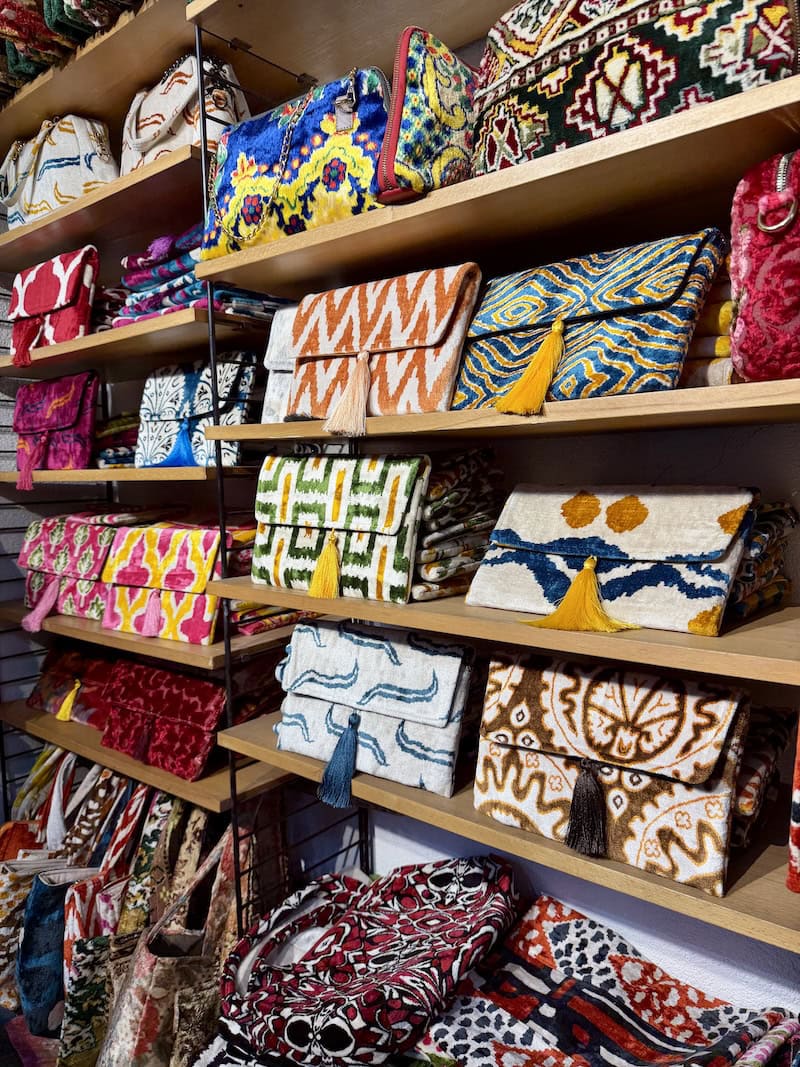

Turkish Bags & Purses
Need a stylish gift that feels 100% local? Turkish purses are it. They’re handmade, lightweight, and full of vibrant colors and motifs. Some are also recycled from authentic carpets and kilims, so you can carry a piece of history with you!
Our two favorite spots to buy Turkish bags are both in Cihangir (actually, on the same street!). Carpetnhome by Serkan Güney (📍location) carries gorgeous and colorful bags of all sizes, from small coin purses to tote bags. Meanwhile, The Old Curiosity Shop ( 📍location) specializes in velvet and linen bags with traditional motifs.
Turkish Slippers (Terlik)
For something cute and practical, how about buying your very own Turkish slippers?
They’re comfortable, easy to pack, and come in endless styles — from colorful hand-embroidered ones to babouche-style leather versions that look like they belong in a sultan’s wardrobe.
You can buy these at any traditional bazaar, although we particularly love supporting small businesses like AnatolianCraft (for chic hand-embroidered leather mules) and Carpetnhome by Serkan Güney (for everyday velvet slips). You can see their wares in the photo above.
Bonus points if you get a matching pair for your bestie back home. 😉

Turkish Scarves
Chic, lightweight, and versatile, silk scarves make excellent souvenirs for your mom, sister, girlfriend, wife, cousin… in a nutshell, this is one of the ultimate Turkish gifts for her. 🙂
You’ll find scarves in practically every Turkish city — bazaars carry traditional motifs like tulips, geometric prints, and tile patterns, while popular stores like LC Waikiki, Mudo, and Yargıci have modern designs.
If you’re traveling to Bursa, definitely don’t miss their silk market — the city has been known as “the silk capital” since ancient times! The Bursa Koza Han is a historical bazaar that is especially famous for its silk goods, including scarves, shawls, pashminas, and much more.
Handicrafts & Home Decor Souvenirs

Turkish Ceramics & Plates
Hand-painted, colorful, and completely irresistible, Turkish ceramics are one of the most iconic souvenirs you can bring home! Whether it’s a blue tulip-patterned plate or a decorative bowl with Ottoman motifs, they instantly add character to any kitchen or coffee table.

Mosaic Lamps
No stroll through a Turkish bazaar is complete without catching a glimpse of those glowing, kaleidoscope-colored mosaic lamps. Some are huge and dramatic, others are small and suitcase-friendly — but all of them add serious ambiance.
While you can definitely buy one from the Grand Bazaar or a boutique in Cappadocia, here’s an even cooler idea: making your own.
That’s right! There are mosaic lamp workshops in Istanbul where you’ll learn how to arrange the tiny pieces of glass, pick your colors and patterns, and glue it all together. At the end, you leave with a functional mosaic lamp you actually crafted with your own hands, wired and ready for your bedside table back home.
It’s part souvenir, part experience, and totally unique. Plus, it’s a fun way to take a break from sightseeing and do something hands-on (and surprisingly relaxing).
This top-rated mosaic lamp workshop in Istanbul starts at just $25/person and lets you bring home a handmade memory! →

Turkish Tiles
If you’ve ever visited a mosque like the Blue Mosque, wandered through Topkapı Palace, or peeked into an old Ottoman-era mansion, you’ve definitely seen those beautiful ceramic tiles covering the walls.
These are Iznik tiles — named after the small town of Iznik in northwest Türkiye — and they’re one of the most iconic forms of Ottoman decorative art. Iznik tiles date back to the 15th century and were originally crafted using quartz, cobalt, and a mix of natural pigments to create intricate floral patterns, geometric motifs, and calligraphy.
But here’s the fun part: you can actually take a piece of that beauty home! Many bazaars sell tiles that were inspired by famous landmarks (i.e. you can find a copy of Topkapi Palace tiles), plus regular tiles with local patterns and designs.
If you’re the kind of traveler that likes to go straight to the source (or just love ceramics), the town of Iznik is still home to master artisans keeping the tradition alive. Visiting Iznik means you can walk into a working tile studio, watch the painting and glazing process firsthand, and even commission a custom piece.
If you’re staying in Istanbul, though, you don’t have to go far to find quality work. We recommend checking out Fırça Iznik Ceramics or İznik Works, two lovely shops in the Grand Bazaar that specialize in handmade ceramics.

Copperware
From Ottoman palaces to street food stalls, copperware has been used in Turkish homes for centuries — and it’s still a staple in homes today.
You’ll see hand-hammered trays, serving bowls, and intricate containers lining the stalls of Gaziantep, Istanbul, and Safranbolu. Some are plain and functional, others are richly engraved with floral or geometric patterns, often finished with tin lining or brass handles.
Magnets
Of course, we couldn’t forget one of the most classical Turkish souvenirs: magnets! Whether it’s mosaic tiles, ceramic evil eyes, mini rugs, Blue Mosque cutouts, or cartoonish sultans, there’s a magnet with it.
They’re lightweight, budget-friendly, and perfect for collecting a memory from each city you visit.


Themed Mugs
Yes, mugs — but not just any mugs! 😉
Starbucks in Turkey has some super cute city-themed cups as part of their “You Are Here” collection: Istanbul mugs with the iconic red tram and ferry, Cappadocia mugs with hot air balloons, and Bodrum mugs with the famous Bodrum Castle and mandarin trees. If you’re a collector, they’re a fun (and practical) keepsake.
For something more local, check out Karaca Home, a popular Turkish kitchenware brand that sells chic Istanbul-themed ceramics like a Medusa head cup (from the Basilica Cistern, above!), spice containers in the shape of Dolmabahce Palace, and cup-and-saucer sets with the Istanbul skyline.
And of course, museum shops often stock landmark mugs — we’ve seen everything from Galata Tower to Topkapı Palace in mug form. Great for sipping your Turkish coffee back home and imagining that you’re still on a chic terrace in Karaköy.
Classic Turkish Cultural Souvenirs

Kolonya
While kolonya definitely had its big moment during a particular unprecedented event in 2020 *ahem*, the history of this natural antiseptic goes back hundreds of years!
Kolonya is a lemon-based cologne with a high alcohol content (usually 80%) that’s used as a disinfectant, hand freshener, and general “welcome to my home” gesture all rolled into one.
You’ll often be offered a dab when entering someone’s house, hotel, or even a restaurant — just pour a splash into your hands, rub, and inhale the sharp citrusy scent.
The most popular brand of Turkish kolonya is Eyüp Sabri Tuncer, which comes in dozens of scents including the classic lemon, as well as Bodrum mandarin, lavender, amber, rose, tobacco, gardenia… there’s even a boxed “Scents of Istanbul” gift set. 🙂
Books About Turkey
If you’re the kind of traveler who likes to read between the landmarks, grab a secondhand or locally written book about Turkey.
You’ll find gorgeous coffee table books in museum shops and chain stores like Penguen Kitabevi, plus beautiful vintage sets in Istanbul’s Beyazıt Sahaflar Çarşısı (the Secondhand Book Bazaar near the Grand Bazaar).

Souvenirs from National Landmarks
Yes, the palace gift shops are touristy — but sometimes they really deliver. Case in point: we once bought a keychain of a cat hugging the Galata Tower from the Dolmabahçe Palace gift shop (photo above!), and it still makes us smile every time we see it.
Most big landmarks like Topkapı Palace, Dolmabahçe, and Galata Tower have curated souvenir corners. You’ll find embroidered bookmarks, notebooks with Ottoman calligraphy, mini sultan figurines, tote bags, and occasionally some surprisingly stylish jewelry. It’s a great way to grab something connected to the places you actually visited.
Bonus tip: Palace shops often stock official museum merch that you won’t find in regular bazaars — and the quality is usually a notch higher.
Silver & Gold Items
If you’re looking for something a bit shinier, Türkiye is an excellent place to buy handmade silver or gold jewelry.
You’ll also spot sleek modern designs in Istanbul’s Grand Bazaar or Kuyumcukent (a wholesale gold district if you’re feeling adventurous). Most shops will give you a certificate of purity and weigh the item in front of you. Bargaining is expected, but only in non-chain stores.
Silver rings with Ottoman motifs, hammered cuff bracelets, and delicate evil-eye charms are all popular picks. If you’re going big (aka buying gold), make sure it’s hallmarked and that the seller is reputable. Otherwise, stick to charming silver pieces and leave feeling like a well-accessorized sultan. 🙂
Niche Turkish Souvenirs

A Traditional Turkish Game Set
Whether it’s an Okey set (a cafe classic, especially among Turkish uncles), a sleek backgammon board, or a beautiful mother-of-pearl chess set, these make for truly authentic Turkish souvenirs for him.
You’ll find plenty of board game sellers around the Tahtakale area in Istanbul, like Ottoman Games (📍location) and Star Oyun (📍location).
Cat-Themed Items
Whether it’s cat-themed magnets, bags, or shirts, these fun souvenirs are sure to remind you of Turkey’s furry locals. 🙂
If you want to look good and support a great cause, we recommend checking out the Cat Museum Istanbul (📍location) and their cute cat-themed shirts, postcards, and other goodies — 50% of all sales from these items will help street animals!
Gift Station near Galata (📍location) also makes some super cute cat-themed souvenirs — the owner of the shop is also the artist who makes them!


Musical Instruments
While they’re a bit hard to pack in your suitcase, traditional Turkish musical instruments make a great gift if you have a musical friend or family member! 🙂
The most famous ones are bağlama (a long-necked string instrument), darbuka (hand drum), ney (flute that’s popular in Sufi music), and bendir (frame drum).
The most popular street to buy musical instruments in Istanbul is around Galip Dede Caddesi (Galip Dede Street), which has dozens of shops and is a short walk from Galata Tower.
Old Turkish Money
Whether it’s Ottoman-era coins or early Republic paper bills, these make a great souvenir for collectors or history buffs!
The Feriköy Antique Market ( 📍location), held on Sundays in Şişli, is one of the best places to search through old lira notes, coin albums, and currency dealers all in one place.
Shadow Puppets (Karagöz)
One of the most charming Turkish souvenirs for kids (or the young at heart). These traditional paper puppets bring Karagöz and Hacivat to life, the mischievous duo from Ottoman-era shadow plays.
You can find them in some branches of Toyzz Shop (a popular Turkish toy chain) or souvenir stores in Sultanahmet.
Calligraphy (Hat Yazı)
For something elegant and meaningful, consider a piece of Turkish calligraphy art. You can get names, words, or Quranic verses beautifully written by hand.
Hat Yazı Turkish Calligraphy near Sultanahmet ( 📍location) offers personalized pieces and even sell full calligraphy kits if you want to try it yourself. If you’re lucky, you might catch the calligrapher at work!
Also check the Beyazıt Secondhand Book Bazaar, where some stalls sell antique or handmade calligraphy pieces tucked among vintage books.
Regional Turkish Souvenirs
Different regions in Türkiye have their own signature crafts, foods, and souvenirs, with many of them still made the old-school way. From coastal towns to highland villages, you’ll find locally rooted souvenirs that reflect the culture, history, and landscape of each area.
Here’s a quick guide to what to pick up depending on where you go:

⛰️ North (Black Sea + Central North)
Hand-carved ships from Sinop are tiny wooden vessels carved by hand, often in homage to Sinop’s shipbuilding heritage.
Saffron from Safranbolu is famously strong, with a vivid aroma and deep yellow color. The town even gets its name from it. Pick up a few strands in tiny glass vials, which are great for gifting.
Rize tea (grown in the hills of the Black Sea) is Türkiye’s everyday staple. Buy loose-leaf black tea and, if you’re a completionist, throw in a tulip-shaped glass set or double teapot (çaydanlık).
Sürmene knives (from Trabzon) are top-quality, hand-forged steel blades that are practical, decorative, and made with local tradition.
Hazelnuts from Ordu are especially famous because they’re the ones used in Nutella!
Kazaziye jewelry (from Trabzon) is made with ultra-fine silver wire twisted into intricate, lacy designs — beautiful and delicate, like metal embroidery.

🏖️ West (Istanbul, Aegean, Marmara)
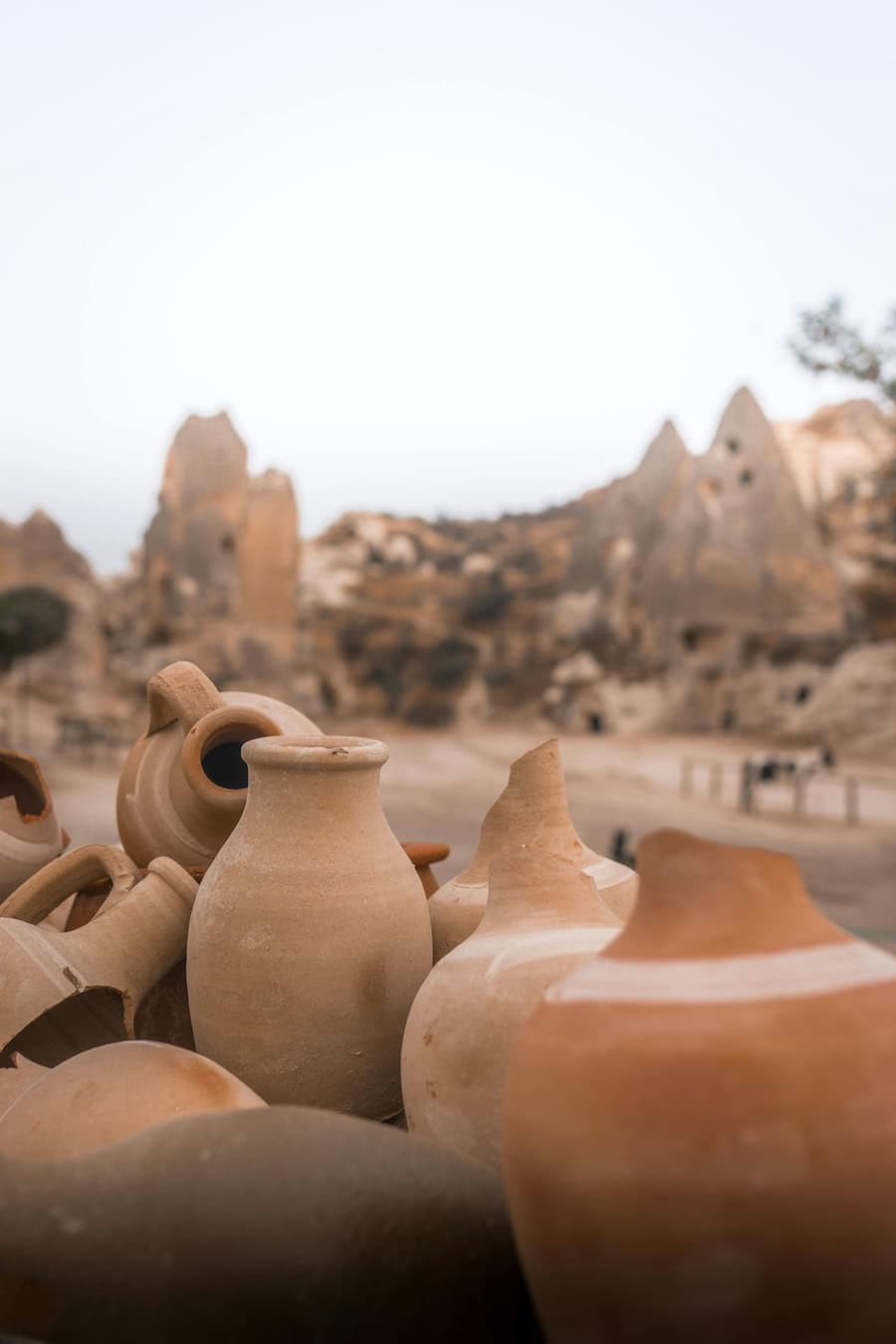
Pottery from Cappadocia is technically Central Anatolia, but many travelers buy it in the west too. The red clay pottery (from Avanos) is beautiful — just be wary of overpriced “factories” that bus in tourists. Family-run shops are better for quality and hospitality. You can make your own with this fun Pottery Workshop class in Cappadocia! →
Evil eye beads (Nazar boncuğu) from İzmir’s Nazarköy are handmade from molten glass and used to ward off bad luck. You’ll see them on keychains, bracelets, and wall hangings.
Olive oil and olive oil soaps from Ayvalık and Edremit make fragrant, practical gifts. The olive oil is peppery and golden; the soaps are usually handmade and packed in brown paper.
Silk scarves from Bursa are woven in Koza Han, once a major Silk Road hub. Some stalls still sell genuine silk dyed by hand.
Iznik ceramics feature bright blue-and-red Ottoman floral patterns. Go for a small bowl, tile, or plate.
Peshtemal towels (from Denizli/Buldan) are flat-woven hammam towels that double as beach wraps, scarves, or lightweight throws.
Candied chestnuts (kestane şekeri) from Bursa are super sweet and very Turkish. If you like chestnuts, these syrupy nuggets are worth a try.


☀️ South (Mediterranean + Adana + Southeast)
Shahmaran souvenirs from Adana/Mardin celebrate the mythical half-snake, half-woman creature said to live in underground springs. You’ll see her on tiles, tote bags, jewelry, and even statues
Mevlana-themed souvenirs from Konya pay tribute to Rumi with whirling dervish figurines, calligraphy prints, and CD recordings of ney flute music. Great spot for spiritually-themed gifts.
Citrus jams (especially bitter orange turunç reçeli) from Antalya are fragrant and locally made.
Bodrum mandarin jam and leather sandals are also must-buys along the southern Aegean coast when visiting Bodrum.
Mother-of-pearl inlay and copperware from Gaziantep are absolute standouts and found in backgammon boards, trays, or mirror frames. The level of craftsmanship is amazing!
Baklava and pistachios from Gaziantep are protected by law (literally, Antep baklava has a geographical indication stamp). Get vacuum-sealed boxes to take home.
Bıttım soap from Mardin is a green, creamy bar made with wild pistachio oil. Locals swear by it for hair and skin.
Filigree silver jewelry (telkari) from Mardin is delicate and airy. You’ll also see workshops in the Beypazarı district of Ankara.

🕌 East (Eastern Anatolia)
Dried apricots from Malatya are juicy, sweet, and typically sun dried.
Oltu stone jewelry from Erzurum is carved from a rare black gemstone, often used for men’s prayer beads or silver-inlaid rings.
Cheese from Kars belongs to the gruyère family and is a legendary local product. So much, in fact, there’s even a Kars Cheese Museum (Kars Peynir Müzesi) in the city!

What Not To Buy in Turkey
While Turkey is full of gorgeous handmade goods and delicious souvenirs, not everything in the bazaar deserves a spot in your luggage!
Some items are better left on the shelf — here are a few things we recommend skipping:
🍏 Apple Tea: Yes, it’s an iconic tourist treat, but it’s also an iconic tourist trap too. Turkish people never drink this, and we had many local friends who had no idea what it was when we asked them. Turkish people drink black tea, while apple tea, on the other hand, is mostly sugar and flavoring powder.
🍬 Pre-packaged Bazaar Sweets: Those colorful boxes of lokum may look pretty in the Grand Bazaar, but they’re not very fresh. A few years ago our friend received one of these boxes and it had a dead moth inside, despite not being expired (🥲). The best lokum comes from historic confectioners like Hacı Bekir, Ali Muhiddin Hacı Bekir, or local shops that sell by the gram.
🎩 Fez Hat: Yes, the red fez might look cool on the ice cream guy who’s trolling tourists with his show, but nobody in Turkey actually wears these. The fez was banned in the 1920s during Atatürk’s modernizing reforms and hasn’t been part of everyday wear since. Unless you’re starting a dondurma business, skip it.
👑 “Ottoman Costumes” for Kids: Alright, so this one deserves a little story. A friend of my aunt once visited Istanbul and proudly bought her toddler a “cute little Ottoman prince costume.” The embroidery! The velvet! The sparkly accessories! She had no idea it was actually a sünnet kıyafeti — a ceremonial outfit worn during a very specific coming-of-age ritual for boys (you can probably guess which one 😅).
👺 Anything Sold with Aggressive Sales Tactics: Last but certainly not least, run (don’t walk!) if someone is chasing you down the street with a “special price just for you, my friend!” You’ll find some of the best souvenirs in Turkey by browsing at your own pace, and good shopkeepers will let their goods speak for themselves.
Questions & Answers
What is the best souvenir from Turkey? / What is the best thing to bring back from Turkey?
The best souvenir from Turkey depends on where you go, but some of the most popular choices include Turkish delight (lokum), evil eye charms (nazar boncuğu), handmade ceramics from Cappadocia, and olive oil soap from the Aegean. Many travelers also love taking home peshtemal towels, tea sets, or copper coffee pots.
Why is Turkey famous for shopping?
Turkey is famous for its traditional bazaars and artisanal markets. Popular shopping items include spices, carpets, Turkish delight, leather goods, handmade jewelry, ceramics, and textiles.
Where can I buy authentic Turkish souvenirs?
The best place to buy authentic Turkish souvenirs is in local markets and workshops outside the main tourist areas. Look for family-owned shops in neighborhoods like Cihangir or Galata (Istanbul), Avanos (Cappadocia), or Mardin’s old city. Avoid mass-produced stalls in high-traffic tourist zones and opt for stores where items are handmade and fairly priced.
What should I avoid buying in Turkey?
Avoid overly touristy items like instant apple tea, cheaply packaged sweets from the bazaar, or costume fez hats. Some items (like Ottoman costumes for kids) may have cultural or religious significance that’s misunderstood outside Türkiye. It’s also best to steer clear of pushy sales tactics — after all, quality items don’t need hard selling.
Are Turkish carpets a good souvenir?
Yes, Turkish carpets and kilims are world-renowned and make beautiful souvenirs. Look for regional varieties like Bergama rugs, and always ask for a certificate of authenticity. Some shops even offer shipping, so you don’t have to fit one in your suitcase. We recommend booking a tour with this rug shopping expert.
What is a traditional Turkish gift?
Traditional Turkish gifts include items like evil eye talismans (nazar), hand-painted ceramic bowls, copper coffee sets, dried fruits like figs or apricots, and silk scarves.
What are the best souvenirs to buy in Istanbul?
What food souvenirs can I bring back from Turkey?
Top food souvenirs include Turkish delight, baklava (especially from Gaziantep), dried apricots from Malatya, pistachios, olives, mandarin jam (from Bodrum), and Turkish black tea. Make sure anything perishable is vacuum-sealed or packed for travel.
Is it safe to bring Turkish spices home?
Yes, Turkish spices like sumac, pul biber (crushed red pepper), cumin, and dried mint are popular souvenirs and are safe to bring home if properly packaged. You can buy them loose in bazaars or in sealed bags from spice shops. Always check your country’s customs regulations just in case, but we’ve never had a problem. 🙂
What’s the difference between Turkish delight from the bazaar and artisanal lokum?
Bazaar Turkish delight is often mass-produced, overly sweet, and sometimes stale. Artisanal lokum is usually fresher, softer, and made in smaller batches with natural ingredients like rosewater, pistachios, or pomegranate. Look for shops with a long history or regional reputation.
What can’t you bring back from Turkey?
Certain items are restricted or prohibited from being taken out of Turkey. Most notably, antiquities and cultural artifacts are protected by law.
Leave a Reply